
What Is Eczema?
- Evan Trinh

- Jul 11
- 2 min read
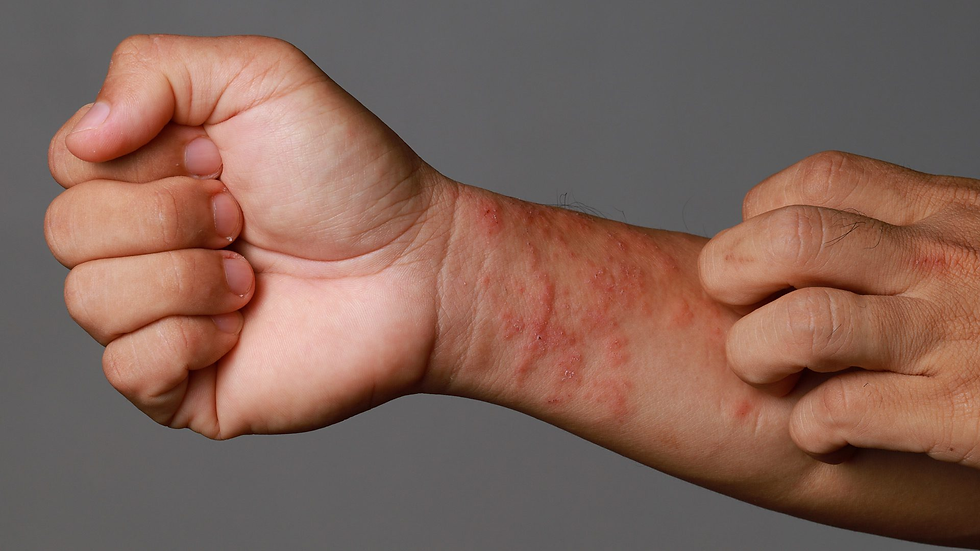
Eczema is one of the most common skin conditions that people around the world deal with. Although I do not personally have eczema, I have seen what it is like through many of my family members who struggle with it. It can be uncomfortable and frustrating to manage, especially when symptoms flare up unexpectedly. Not to worry, this blog will explain what eczema is and go over some common treatments that can help.
According to Cleveland Clinic, eczema is a skin condition that causes dry, itchy, and sometimes bumpy skin. It happens because the skin’s barrier is weakened, which makes it harder for the skin to hold in moisture and protect against irritants in the environment. Because of this, the skin becomes more sensitive and prone to irritation. It is also important to know that eczema is not contagious, so it cannot spread from person to person.
There are several types of eczema, including atopic dermatitis, contact dermatitis, dyshidrotic eczema, neurodermatitis, nummular eczema, and seborrheic dermatitis. Each type has different triggers, but they all affect the skin’s barrier in some way. Eczema can affect people of all ages, but it often starts in childhood. In fact, it affects more than 31 million Americans, and many children may see improvement as they grow older.
Common symptoms of eczema include dry skin, itchiness, rashes, bumps, and patches of skin that may look flaky, scaly, or thickened. These symptoms can appear in many areas of the body, such as the hands, elbows, knees, face, and neck. Triggers can vary from person to person, but common ones include dry weather, certain fabrics, soaps, skin care products, allergens, and even stress.
While there is no cure for eczema, there are many ways to manage it. Treatments often focus on keeping the skin moisturized and avoiding triggers that cause flare-ups. Using gentle, fragrance-free moisturizers regularly can help protect the skin barrier. Doctors may also recommend topical medications like steroids, oral medications to reduce inflammation, or light therapy, depending on the severity. Avoiding irritants and identifying personal triggers are also important parts of managing symptoms.
I hope this blog gives more personal insight into what eczema is and the next steps to take if you have it.



Comments