
What Parasite Teaches Us About Skin and Perspective
- Evan Trinh

- Jun 21
- 3 min read

Out of all the movies I have watched, Parasite remains one of my absolute favorite films to this day. Directed by Bong Joon-ho, the movie explores the divide between social classes by highlighting the quiet ignorance of the wealthy and the reality faced by the working class. While the story centers around two families in Korea, its message goes far beyond class. It pushes us to look deeper at people’s environments and how those environments shape their lives.
In our dermatology club, we have always focused on giving back to underfunded communities, whether that is through fundraising for unhoused individuals or small efforts like providing care kits to the construction crew at our school. Reflecting on Parasite, I started to see a connection between the film’s central message and one of our club’s main goals. What we see on the surface does not tell the full story.
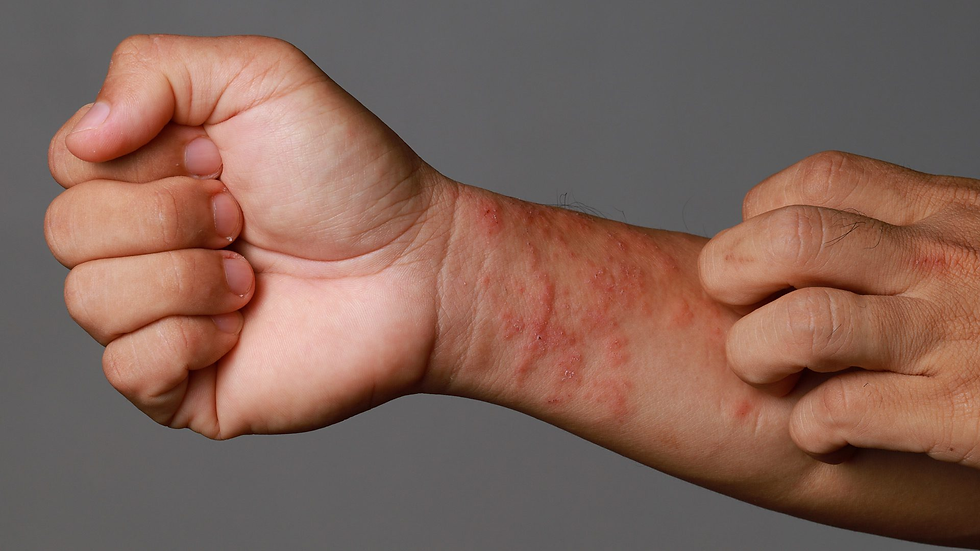
This idea shows up clearly in dermatology. When people look at skin conditions like acne, irritation, or uneven skin tone, they usually focus on what is visible. But after spending time shadowing and learning more about skin, I realized that most conditions are influenced by what is happening underneath. Oil production, bacteria, inflammation, and even stress can all affect the skin. In a way, the surface is just the final result of everything going on below.
The title Parasite itself adds another layer to this idea. In the film, the housekeeper’s husband secretly lives in the basement, hidden from the Park family. He survives by relying on what is above him, completely unnoticed. This hidden presence is central to the story because it represents something that exists but is ignored. In dermatology, there is a similar concept. Our skin naturally has bacteria living on it all the time. Most of the time, they are harmless or even helpful, but when the balance is disrupted, they can contribute to issues like acne or irritation. It is easy to think of these as something negative, like a “parasite,” but in reality, they are part of a larger system that we usually do not see.
The film also emphasizes how the environment shapes outcomes. The Kim family’s home is cramped, humid, and vulnerable to flooding, while the Park family lives in a clean and open space. From what I have learned, the environment can have a big impact on skin as well. Things like heat, humidity, lack of access to skincare, or even daily stress can affect how someone’s skin reacts. Not everyone has the same conditions, and that plays a bigger role than people think.
Even smaller details in the movie, like the idea of “smell,” reflect how people are judged based on things tied to their environment. In real life, skin conditions or body odor can sometimes carry stigma, even though they are often caused by natural processes or external factors. This is something that I think dermatology helps address, not just by treating skin but by helping people understand it better.
At first, it might seem unusual to connect a film like Parasite to dermatology. But both share a common idea. There is always more beneath the surface than what we see. As a club, our goal is not just to talk about skincare, but to understand the bigger picture and support people in a more meaningful way. Even if the connection seems unexpected, thinking beyond the box can lead to a deeper understanding of both science and the world around us.


Comments